Photo Journalism : Taylor Harvey Brigden
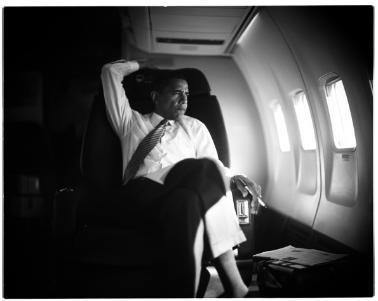
David Burnett
quick bio:Co-founder of Contact Press images a new york based photojournalist agency, which has been in business for three decades.
What made this photo stick out for me was the way he represented Obama. He governs one of the biggest superpowers in the world if not the biggest. But even so he is still human. How David Burnett constructed the image was to humanise Obama and bring him down to the level of the voters "make him one of the people". What i also liked was the high contrast in the photo this could be from the natural lighting in the plain. Also looking deeper into the photo Obama is looking towards the light and this could be seen as him looking to a brighter future. also his left is nearly pitch black so it could be seen as him leaving the darkness (issues such as the iraq war and the recession etc) behind. I understand this photo is a complete construct meant for a political purpose (to get obama two terms in the Wight house) but it well composed and draws the audience attention into the smallest detail. i want to try to use natural light in my photos to give images that natural feel i also want to create extra meaning with the lighting i use like symbolising the future.
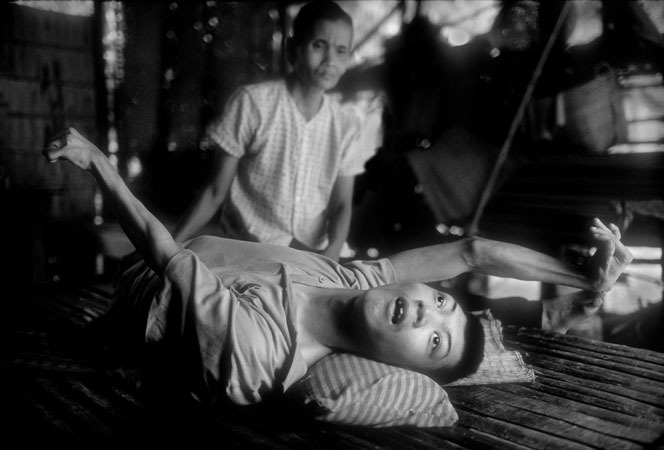
Philip Jones Griffiths
Quick Bio: A welsh photographer Philip studied pharmacy in Liverpool and work part time as a photographer for the manchester Guardian. In 1961 he became a full time freelance photographer and the following year covered the Algerian war, moving to central africa then to asia where his well known photos of the Vietnam war were taken (this is his best known work).
This photo is of a victim of the Bio chemical weapon "Agent Orange" which the americans used to kill over 400,000 people during the conflict in Vietnam and the ones who servived the attack were left were serious health issues and disabilities, it also increased the amount of miscariges, birth defects, mental health issues and horrrible mutations in new born children with some of them being born with out eyes or even skin. What stands out in this image is the shallow depth of field you can see the young man ( who was one of the people affected by agent orange and after 10 years his condition has not changed) but everything else is out of foucus including his mother, I can only assume that he used a lens similar to a 50 mm. what this does to the photo is draws the attention to the poor man suffering and alienates his mother, since she has had to live with this for over ten years and by looking at the surroundings they live on the basics. So it is a shocking look into Americas dark history but it also makes us feel sympathy to the people suffering and can create a feeling of wanting to help these people. I believe that to be the intended purpose of the photo
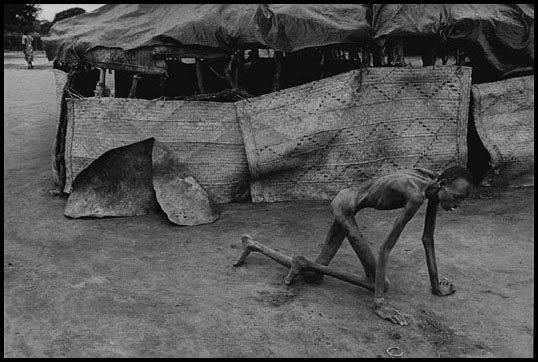
James Nachtwey
Quick Bio: James studied art history and political science (1966-70). His decision to become a photographer was influenced by images from the Vietnam War. he worked aboard ships in the merchant marine and taught himself photography.
This is my personal favourite in his collection more so because i know some of the back story behind it, from reading his site and news articles at the time. This photo was taken at a food centre in sudan 1993, at this time there was one of the biggest famines in the countries history, one nickname that circulated around the media was the harvest of death because of the high number of fatalities due to starvation. With this back story in mind the photo becomes even more shocking, the focus is of the skeleton of a man who is crawling naked through the dirt desperate for food and it is this struggle that makes this photo so griping. He has reached "safety" but because of the high number of people needing food there is nothing or no one to help and in the far left hand corner you can see some one walking away. This empathise the point that there is no body who can help this individual. This photo also made me question the moral integrate of war journalists and similar professions, The man is clearly in need of help but photographers in this situation are just there to observe and record, photos may invoke political or charitable movements but at that time of the photo he chose the photo over someones life.
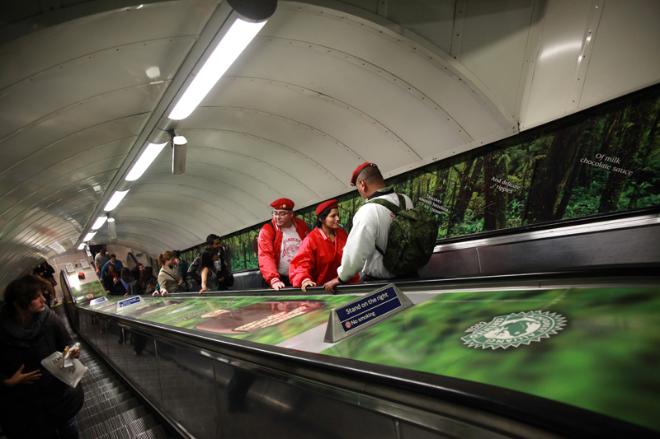
Quick Bio: Ed Thompson developed a distinctive style from an early apprenticeship with the Russian photographer Sergey Chilikov, whom he met at the Arles Photography Festival in 2002. Sergeys friend, Gueorgui Pinkhassov told him how the everyday can allow you to touch at something great. In 2007 he studied the Master's Degree in Photojournalism and Documentary Photography at the London College of Communication. His documentary photo-essays have been published in international magazines & newspapers including National Geographic Magazine, Newsweek Japan and Greenpeace Magazine.
What I like about this image is first of all the setting. The london underground is extremely hard to take photos on especially with big cannon cameras and other professional equipment this all down to terror threats so often I have been told to put my camera away or it would be confiscated, by security and transport police, when i have taken photos on the underground. So it already a hard photo to take but what i also like is how isolated the subjects look (Guardian angels group in red). the underground is a busy and cramped environment so often is easy to become just a face in the cowed, so it interesting to see these individuals stick out and avoided socially by the general public. I like the idea of capturing the individual among the cowed and its something that i want to implement in my photo essay. I also find the setting intresting and i might even consider london as my location for my essay.
