Technical Design
Matthew Fryer
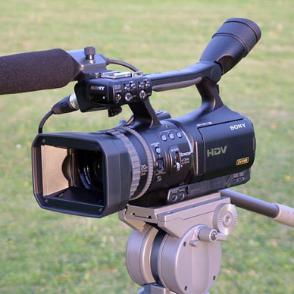
There are different benefits and limitations when using any kind of camera, therefore it is essential in choosing the correct camera for the job. Below I have analysed a Canon 600D and a Sony HRV1e in terms of their usability in our Documentary film.
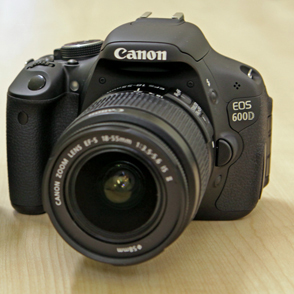 |  |
CANON 600D
Pros: - DSLR Cameras are compact, easily transportable and quick to set up. - Interchangeable lenses allows for a greater amount of control with framing, DOF etc - Can also take stills in and around filming: a major factor in Doc. - DSLR's are easy to manipulate technically, allowing for quicker and smoother changes. - A DSLR is small and unobtrusive, meaning the interviewee is less likely to be intimidated by a large camera being pointed at their face. - Capturing footage is not an issue, as shots are saved as a .mov file. This saves stress and time, whilst also combating all the problems of DV tapes, such as the 30 second gap etc. - Saves money with no need to buy DV tapes, this is a factor on a shoestring budget film. | Cons: - Sound must be recorded separately (although this may not be a con as it allows for a greater amount of audio control) - Short battery life. - Only 15 minute video length. This could be an issue in interviews. - Could be perceived as amateur meaning we won't be taken seriously by our subject. - If a scuffle breaks out the footage will shake (however this might look good and help reinforce the dramatic effect) - Camera shake on moving shots is a problem (the doc however will have a large amount of still frames for talking heads etc) |
Countermeasures for Cons
Sound must be recorded separately: This is an issue however we can use a clapper to sync the audio and video together. For the interviews this won't be a problem however if we do any shots on the street following the subject around, we may have to sacrifice pristine audio for the chance at a dynamic scene.
Short battery life: Carry an abundance of spare batteries.
15 minute video length: Have two camera's set up, filming at half intervals so that when one shot must end the other camera is still rolling.
Perception of amateurism: Make sure to act professionally in all other aspects and the subject won't notice the camera, it is also possible that they will not know the difference between an amateur and professional camera.
Camera shake/unexpected action: DSLR's are renowned for having unstable frames. However I have personally invested in a shock absorbant shoulder mount for some shots, but also in a professional Glidecam. Specifically a Flycam 3000.
Sony HRV1e
Pros: - Professional level camera with complete control over every technical parameter. - No camera shake, can comfortably film without any kind of rig. - Sound can be captured with complete control on this camera, meaning easy monitoring and editing. - Monitors can be attached for better video monitoring. - Technically impressive shots such as trombone shots are more easily executed. - Built in shot transition mode technology. - Autofocusing is silent whereas a DSLR lens makes noise when focusing. Furthermore the AF on a Sony V1e is more accurate and less sporadic than its DSLR counterpart. | Cons: - DV tapes are notorious for having capturing problems. - DV tapes take a long time to capture and filter through the footage. - You risk ruining the tape every time you rewind to review the shots you have taken. - More conspicuous, could intimidate the interviewee. - On the street a Sony V1e is more noticeable, with a DSLR people could think you're just taking photos. - Less maneuverable than a DSLR, over cumbered with wires. You are constantly attached to a sound man. |
Countermeasures for Cons
DV Tapes: Read up on DV tape strategies such as the 30 sec gap and stopping the rewind before the beginning of the tape etc.
Conspicuousness: Set up the camera further away so that it is not in their face, make sure the interviewee feels comfortable with the camera and faces the director not the camera.
Maneuverability: Make sure we have good CM keeping all cables looped with enough slack to move about, and make sure the audio technician and camera operator work well together, and that the sound technician follows the camera operators lead.
Click here for a technical workshop in which we have experimented and demonstrated advanced techniques with the Sony V1e in order to familiarize ourselves with the camera.
Click here for a deconstruction of the Flycam.
Click here for a technical breakdown of a DSLR camera.
Click here for an explanation into three point lighting.
Click here for an explanation and examples of cinemagraphs.
